Imagine spending hours creating an email campaign. You write a strong subject line, choose a good offer, design the email, and send it to hundreds or thousands of subscribers.
Then you check the results.
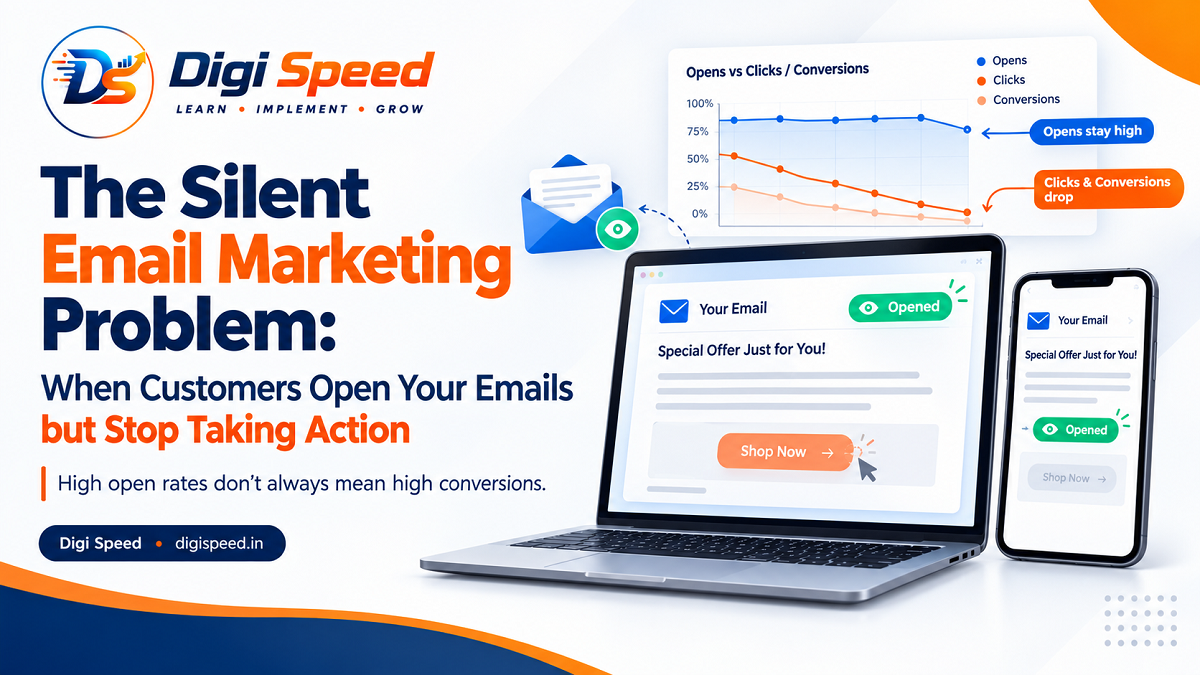
People are opening your emails.
At first, this looks like a success.
But there is one problem: almost nobody is clicking, replying, signing up, or buying.
This is one of the most overlooked problems in email marketing. An email can have a reasonable open rate and still fail to generate meaningful business results.
Read Also: Online Visibility vs Customer Intent: What Really Matters?
The problem is not always the subject line. In many cases, the real issue starts after the customer opens the email.
They may read the first few lines, understand what you are offering, and then simply move on.
So, why does this happen?
Let’s look at the reasons and, more importantly, what you can do about them.
What Does It Mean When Customers Open Emails but Take No Action?
Opening an email shows that something attracted the subscriber’s attention. It could be the subject line, the sender’s name, the timing, or their existing interest in your business.
However, an open does not automatically mean intent to purchase.
A customer might open an email because they are curious. They may want to see an offer. They may recognize your brand. They may even be interested in the topic.
But after opening the email, they need another reason to take the next step.
That next step could be:
- Clicking a link
- Downloading a resource
- Booking a consultation
- Requesting a demo
- Making a purchase
- Replying to the email
- Visiting a landing page
If subscribers regularly open your emails but rarely take these actions, your email campaign may have an engagement-to-action problem.
1. Your Email Is Informative but Not Useful Enough
One common mistake is writing emails that contain information without giving the reader a clear reason to act.
For example, a digital marketing company might send an email saying:
“Here are the latest trends in digital marketing.”
The information may be interesting, but what should the reader do next?
If the email ends without a clear next step, many readers will simply close it.
Instead, connect information with a useful action.
For example:
“Want to find out which digital marketing strategy could work for your business? Book a free consultation.”
The second version gives the reader a clear path.
Your email should answer a simple question:
“Why should I take action right now?”
If the answer is not obvious, the customer may continue reading but never convert.
2. Your Call-to-Action Is Too Weak
A call-to-action, commonly called a CTA, tells the reader what to do next.
Weak CTAs often look like:
- Click Here
- Read More
- Submit
- Learn More
These aren’t always wrong, but they may not communicate enough value.
A stronger CTA focuses on the benefit.
For example:
- Get My Free SEO Audit
- Book a Free Strategy Call
- See the Available Plans
- Download the Email Marketing Checklist
- Start Your Free Consultation
The difference is small, but the second type of CTA gives the customer more context.
Before adding a CTA, ask yourself:
What will the customer get after clicking this button?
If the benefit is clear, the action becomes easier to understand.
3. The Email Does Not Match the Customer’s Intent
Not every subscriber is at the same stage of the buying journey.
One person may be researching a service.
Another may already know what they want.
Someone else may have purchased from you before.
Sending the same email to all three people can reduce engagement.
For example, imagine a person downloads an SEO guide from your website.
Their immediate interest may be learning about SEO.
Sending them a hard sales message the next day may be too aggressive.
A better approach could be:
- Send useful SEO information.
- Explain common SEO problems.
- Share practical solutions.
- Introduce your service.
- Offer a consultation or audit.
This approach follows the customer’s level of interest instead of pushing everyone toward the same action.
4. Your Emails Are Becoming Too Predictable
Email fatigue is another silent problem.
If every email looks and sounds the same, subscribers may continue opening messages but stop paying attention.
For example, if every week your email follows this pattern:
“New Offer → Buy Now → Limited Time → Buy Now”
people may eventually stop responding.
Even if they still open the emails, the message may no longer feel fresh.
Try changing the purpose of your emails.
You can mix:
- Educational emails
- Customer stories
- Practical tips
- Product announcements
- Industry insights
- Frequently asked questions
- Case studies
- Special offers
The goal is not to make every email promotional.
The goal is to make your subscriber feel that opening your email is worthwhile.
5. Your Offer May Not Feel Relevant
Sometimes the problem isn’t the email itself.
The offer is simply not relevant to the person reading it.
Imagine a subscriber is interested in SEO services, but your email promotes graphic design packages.
They might open the email because they recognize your brand, but there is little reason for them to click.
This is where audience segmentation becomes important.
Instead of treating your entire email list as one audience, consider creating groups based on factors such as:
- Previous purchases
- Website activity
- Services viewed
- Downloaded resources
- Location
- Business type
- Customer interests
- Stage in the buying journey
Better segmentation can help you send more relevant messages.
When an email feels personally relevant, the customer has a stronger reason to continue.
6. Your Email Creates Interest but Your Landing Page Breaks the Experience
This is a problem many businesses overlook.
Your email may be excellent, but what happens after the customer clicks?
Suppose your email says:
“Get a Free SEO Audit.”
The customer clicks the CTA and reaches a generic homepage.
Now they have to search for the SEO audit themselves.
That extra effort can cause them to leave.
The landing page should continue the same message started in the email.
If the email promises an SEO audit, the landing page should immediately explain the audit and provide a simple way to request it.
Think of the email and landing page as one customer journey.
The email creates interest.
The landing page should make the next step easy.
7. You Are Asking for Too Much Too Soon
Another reason customers hesitate is that the requested action feels too large.
For example, a new subscriber may not be ready to purchase an expensive service after receiving one email.
Instead of immediately asking for a sale, consider offering a smaller next step.
For example:
- Download a free guide
- Watch a short tutorial
- Book a free consultation
- Request an audit
- Join a webinar
- Get a checklist
These actions require less commitment.
Once the customer becomes more familiar with your brand, a larger action may become easier.
How to Fix the Email Engagement-to-Action Gap
If your emails are being opened but are not producing results, don’t immediately assume that you need more subscribers.
Start by reviewing the complete customer journey.
Ask yourself:
1. Is the email relevant?
Does it address a problem that this particular audience actually has?
2. Is the benefit clear?
Can the reader understand what they will gain from taking action?
3. Is there one primary CTA?
Too many competing buttons can make the next step confusing.
4. Does the landing page match the email?
The message, offer, and expectation should remain consistent.
5. Is the requested action realistic?
Consider whether the customer is ready for that level of commitment.
6. Are you sending too many promotional emails?
If every message asks for a purchase, subscribers may become less responsive over time.
7. Are you measuring the right results?
Open rates can provide useful information, but they are only one part of the picture.
Look at metrics such as:
- Click-through rate
- Conversion rate
- Replies
- Sign-ups
- Purchases
- Unsubscribe rate
- Revenue generated
These metrics can tell you whether your emails are actually moving customers toward a meaningful action.
A Simple Email Structure That Can Encourage Action
A useful email does not need to be complicated.
You can try this simple structure:
Problem → Insight → Solution → Benefit → CTA
For example:
Problem:
Many businesses receive website visitors but struggle to turn them into leads.
Insight:
One reason may be that visitors don’t have a clear next step.
Solution:
A focused landing page with one clear offer can reduce confusion.
Benefit:
Visitors can understand the offer quickly and know exactly what to do next.
CTA:
Get a Free Landing Page Review.
This structure keeps the email focused and makes the purpose of the CTA easier to understand.
Final Thoughts
When customers open your emails but stop taking action, the problem may not be your email list or even your subject line.
The real issue can be what happens after the email is opened.
Your message needs to be relevant. Your offer needs to make sense for the customer. Your CTA should communicate a clear benefit, and the landing page should deliver what the email promised.
Most importantly, don’t judge an email campaign only by how many people opened it.
An open is the beginning of customer attention, not the final goal.
The real question is:
Did the email help the customer take the next useful step?
If the answer is no, look at the complete journey—from the customer’s problem to your email, from the email to the CTA, and from the CTA to the final conversion.
Small improvements at each stage can make your email marketing more useful, more relevant, and more effective.
For businesses that want sustainable results from digital marketing, the goal should not simply be to send more emails. The goal should be to send better emails to the right people at the right stage of their journey.

Saurabh Kumar Shrivastav is a Digital Marketing Expert, Web Designer & Developer, and Founder of Digispeed.in, with 12+ years of experience in digital marketing and web solutions. He shares practical insights on SEO, Google Ads, social media, content marketing, web development, and online business growth to help readers build and grow their online presence.